Beschreibung
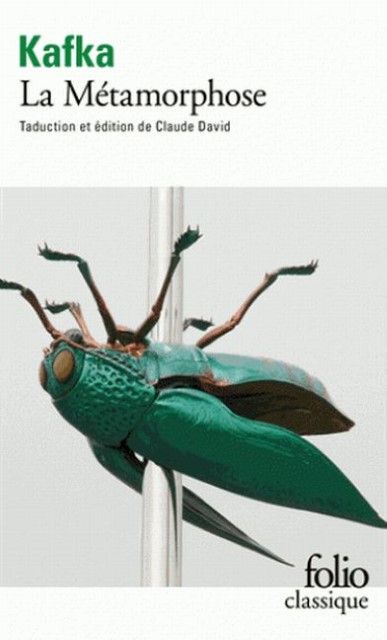
Few 20th century novelists can have been subjected to quite as much dissection and analysis as Franz Kafka. Nor can many have bestowed such a powerful and pervasive version of reality through their writing; so much so that the term Kafkaesque is now commonly used to describe situations or environments in modern society.Being a Czech Jew trapped approximately between Stalins Russia and Hitlers Germany (both temporally and geographically) it is perhaps not surprising he was obsessed with state control and persecution of individuals. All three of his novels, The Trial, The Castle and Amerika reflect this and, perhaps, foreshadow what was about to happen in a world that became even more nightmarish than even Kafkas universe. The novella Metamorphosis, arguably his most famous work, looks at a more microcosmic example of alienation and rejection.All of Kafkas writings are hugely allegorical devising elaborate metaphors for authority, society and the human condition. In Metamorphosis the metaphor is for illness and difference when the storys protagonist awakes one morning to find himself transformed into a giant insect. How his life and relationships change and how people react to him over a period of time is a parable of human callousness and indifference and could be seen as a chilling precursor to the Holocaust and Stalins terror. Being a Jew himself Kafka would already have known something of anti-Semitism and discrimination, even hatred. The Russians had been persecuting the Jews with their pogroms for centuries; the German attempt at genocide was about to start and, perhaps Kafka had a foreboding of the way the world was heading and the tragic and pivotal role that Jews would, unwillingly, play.Metamorphosis stands as a fascinating exploration of difference, cruelty and, ultimately, inertia. Nazi Germany gave it an unlooked for and terrible manifestation in the real world where the stuff of horror and twisted fantasy became sickening reality for many, while others denied or passed by on the other side of the street.
Über Franz Kafka
Franz Kafka:Franz Kafka (3 July 1883 3 June 1924) was a German-language writer of novels and short stories, regarded by critics as one of the most influential authors of the 20th century. Kafka strongly influenced genres such as existentialism. Most of his works, such as "Die Verwandlung" ("The Metamorphosis"), Der Prozess (The Trial), and Das Schloss (The Castle), are filled with the themes and archetypes of alienation, physical and psychological brutality, parentchild conflict, characters on a terrifying quest, labyrinths of bureaucracy, and mystical transformations.Kafka was born into a middle-class, German-speaking Jewish family in Prague, then part of the Austro-Hungarian Empire. In his lifetime, most of the population of Prague spoke Czech, and the division between Czech- and German-speaking people was a tangible reality, as both groups were strengthening their national identity. Kafka himself was fluent in both languages, considering German his mother tongue.Kafka began to write short stories in his spare time. For the rest of his life, he complained about the little time he had to devote to what he came to regard as his calling. He regretted having to devote so much attention to his Brotberuf ("day job", literally "bread job"). Kafka preferred to communicate by letter; he wrote hundreds of letters to family and close female friends, including his father, his fiancée Felice Bauer, and his youngest sister Ottla. He had a complicated and troubled relationship with his father that had a major effect on his writing. He also suffered conflict over being Jewish, feeling that it had little to do with him, although critics argue that it influenced his writing.Only a few of Kafka's works were published during his lifetime: the story collections Betrachtung (Contemplation) and Ein Landarzt (A Country Doctor), and individual stories (such as "Die Verwandlung") in literary magazines. He prepared the story collection Ein Hungerkünstler (A Hunger Artist) for print, but it was not published until after his death. Kafka's unfinished works, including his novels Der Prozess, Das Schloss and Amerika (also known as Der Verschollene, The Man Who Disappeared), were published posthumously, mostly by his friend Max Brod, who ignored Kafka's wish to have the manuscripts destroyed. Albert Camus and Jean-Paul Sartre are among the writers influenced by Kafka's work; the term Kafkaesque has entered the English language to describe surreal situations like those in his writing.Davies Guttmann:Davies Guttmann was born in 1966 in Vienna, were he lives with his wife and their four children.He started his business life 1988 as editor of the leading Austrian stock market letter. Many other financial publications followed. Guttmann also worked for various newspapers as a financial journalist. In the 90ies he was co-publisher of werk-zeug, a technology and art magazine, as well as Streetfashion, a magazine featuring fashionable people on the streets of the world.After this Guttmann worked as a Alternative Investment and Private Equity specialist.
E-Book Informationen
Alle hier erworbenen E-Books können Sie in Ihrem Kundenkonto in die kostenlose PocketBook Cloud laden. Dadurch haben Sie den Vorteil, dass Sie von Ihrem PocketBook E-Reader, Ihrem Smartphone, Tablet und PC jederzeit auf Ihre gekauften und bereits vorhandenen E-Books Zugriff haben.
Um die PocketBook Cloud zu aktivieren, loggen Sie sich bitte in Ihrem Kundenkonto ein und gehen dort in den Bereich „E-Books“. Setzen Sie hier einen Haken bei „Neue E-Book-Käufe automatisch zu meiner Cloud hinzufügen.“. Dadurch wird ein PocketBook Cloud Konto für Sie angelegt. Die Zugangsdaten sind dabei dieselben wie die Ihres Kundenkontos in diesem Webshop.
Weitere Informationen zur PocketBook Cloud finden Sie unter www.meinpocketbook.de.
Allgemeine E-Book-Informationen
E-Books in diesem Webshop können in den Dateiformaten EPUB und PDF vorliegen und können ggf. mit einem Kopierschutz versehen sein. Sie finden die entsprechenden Informationen in der Detailansicht des jeweiligen Titels.
E-Books ohne Kopierschutz oder mit einem digitalen Wasserzeichen können Sie problemlos auf Ihr Gerät übertragen. Sie müssen lediglich die Kompatibilität mit Ihrem Gerät prüfen.
Um E-Books, die mit Adobe DRM geschützt sind, auf Ihr Lesegerät zu übertragen, benötigen Sie zusätzlich eine Adobe ID und die kostenlose Software Adobe® Digital Editions, wo Sie Ihre Adobe ID hinterlegen müssen. Beim Herunterladen eines mit Adobe DRM geschützten E-Books erhalten Sie zunächst eine .acsm-Datei, die Sie in Adobe® Digital Editions öffnen müssen. Durch diesen Prozess wird das E-Book mit Ihrer Adobe-ID verknüpft und in Adobe® Digital Editions geöffnet.
„Bei E-Books die, mit Readium LCP geschützt sind erscheint bei dem ersten Öffnen auf ihrem Reader ein Hinweisfenster mit der Aufforderung ein Passwort einzugeben. Gleichzeitig öffnet sich ein Infofeld in dem das Passwort steht. Tragen Sie dieses Passwort in das Eingabefeld ein und bestätigen Sie die Eingabe. Danach öffnet sich das E-Book automatisch. Um E-Books die mit Readium LCP geschützt sind auf einem Tablet/Laptop/Smartphone lesen zu können, benötigen Sie ein Programm, das in der Lage ist, mit diesem Kopierschutz umzugehen. Das ist z.B. der Thorium Reader (Windows, Mac, Linux) oder die PocketBook App (iOS, Android). Fügen Sie das heruntergeladene E-Book in das Programm ein. Bei dem ersten Öffnen erscheint ein Hinweisfenster mit der Aufforderung ein Passwort einzugeben. Gleichzeitig öffnet sich ein Infofeld in dem das Passwort steht. Tragen Sie dieses Passwort in das Eingabefeld ein und bestätigen Sie die Eingabe. Danach öffnet sich das E-Book automatisch.“