Beschreibung
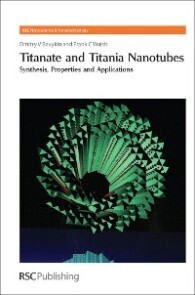
This exciting new book is a unique compilation of data from a wide range of chemical and spectroscopic instrumentation and the integration of nanostructure characterisation drawn from physical, chemical, electrochemical, spectroscopic and electron microscopic measurements. It fills a gap in the current nanomaterials literature by documenting the latest research from scientific journals and patent literature to provide a concise yet balanced and integrated treatment of an interesting topic: titanium oxide nanostructures within the emerging fashionable area of nanomaterials. Of particular interest are the following key chapters: * Modification and Coating Techniques - provides a unique summary and discussion of available techniques to coat surfaces with nanostructured materials * Chemical Properties - relates structure to surface chemistry and hence applications * Structural and Physical Properties - reviews the relationship between nanostructure and physical properties providing a basis for the rationalisation of applications The book, a valuable reference point, is aimed at professionals, postgraduates and industrial research workers in nanomaterials. Readers will gain a knowledge of the methods for synthesising nanomaterials as well as an understanding of their structure and resulting physical characteristics and a knowledge of their (existing and potential) applications.
Über Dmitry V Bavykin, Frank C Walsh
Dr Dmitry Bavykin has over 10 years experience of academic aspects of physico-chemical properties of nanostructured materials including photochemistry, photophysics and catalysis. He received an MSc (Chemistry) at Novosibirsk State University in 1995 and a PhD (Chemical Engineering) at Boreskov's Institute of Catalysis, Novosibirsk in 1998. He was awarded a NATO/Royal Society Fellowship in 2002 to study the preparation, characterisation and application of titanium dioxide nanotubes in electrochemistry and catalysis at the University of Bath. Currently, he is a Lecturer in the School of Engineering Sciences at the University of Southampton. His major area of interest is the application of novel, nanostructured materials to renewable energy problems. Professor Frank Walsh has over 30 years experience of academic and industrial aspects of electrochemical materials and processes and he is the author of over 250 papers and three books in the areas of electrochemistry and electrochemical engineering. He holds the degrees of BSc in Applied Chemistry (Portsmouth), MSc in Materials Protection (UMIST/Loughborough) and a PhD on electrodeposition of high surface area (powder) materials from Loughborough University, UK. Professor Walsh is a chartered and registered European Engineer, an international consultant and he leads a research group in electrochemical engineering. Previous positions include Business Development Director (Science) at the University of Portsmouth and Head of the Chemical Engineering Department at the University of Bath. He is currently Professor in Electrochemical Engineering at the University of Southampton and takes a particular interest in fuel cells, surface engineering and nanomaterials as electrode structures.
Inhalt
Chapter 1: Introduction and Scope; Chapter 2: Synthesis Techniques and Mechanism of Growth; Chapter 3: Structural and Physical Properties of Elongated TiO2 and Titanate Nanostructures; Chapter 4: Chemical Properties, Transformation and Functionalization of Elongated Titanium Oxide Nanostructures; Chapter 5: Potential Applications Summary
E-Book Informationen
Alle hier erworbenen E-Books können Sie in Ihrem Kundenkonto in die kostenlose PocketBook Cloud laden. Dadurch haben Sie den Vorteil, dass Sie von Ihrem PocketBook E-Reader, Ihrem Smartphone, Tablet und PC jederzeit auf Ihre gekauften und bereits vorhandenen E-Books Zugriff haben.
Um die PocketBook Cloud zu aktivieren, loggen Sie sich bitte in Ihrem Kundenkonto ein und gehen dort in den Bereich „E-Books“. Setzen Sie hier einen Haken bei „Neue E-Book-Käufe automatisch zu meiner Cloud hinzufügen.“. Dadurch wird ein PocketBook Cloud Konto für Sie angelegt. Die Zugangsdaten sind dabei dieselben wie die Ihres Kundenkontos in diesem Webshop.
Weitere Informationen zur PocketBook Cloud finden Sie unter www.meinpocketbook.de.
Allgemeine E-Book-Informationen
E-Books in diesem Webshop können in den Dateiformaten EPUB und PDF vorliegen und können ggf. mit einem Kopierschutz versehen sein. Sie finden die entsprechenden Informationen in der Detailansicht des jeweiligen Titels.
E-Books ohne Kopierschutz oder mit einem digitalen Wasserzeichen können Sie problemlos auf Ihr Gerät übertragen. Sie müssen lediglich die Kompatibilität mit Ihrem Gerät prüfen.
Um E-Books, die mit Adobe DRM geschützt sind, auf Ihr Lesegerät zu übertragen, benötigen Sie zusätzlich eine Adobe ID und die kostenlose Software Adobe® Digital Editions, wo Sie Ihre Adobe ID hinterlegen müssen. Beim Herunterladen eines mit Adobe DRM geschützten E-Books erhalten Sie zunächst eine .acsm-Datei, die Sie in Adobe® Digital Editions öffnen müssen. Durch diesen Prozess wird das E-Book mit Ihrer Adobe-ID verknüpft und in Adobe® Digital Editions geöffnet.
„Bei E-Books die, mit Readium LCP geschützt sind erscheint bei dem ersten Öffnen auf ihrem Reader ein Hinweisfenster mit der Aufforderung ein Passwort einzugeben. Gleichzeitig öffnet sich ein Infofeld in dem das Passwort steht. Tragen Sie dieses Passwort in das Eingabefeld ein und bestätigen Sie die Eingabe. Danach öffnet sich das E-Book automatisch. Um E-Books die mit Readium LCP geschützt sind auf einem Tablet/Laptop/Smartphone lesen zu können, benötigen Sie ein Programm, das in der Lage ist, mit diesem Kopierschutz umzugehen. Das ist z.B. der Thorium Reader (Windows, Mac, Linux) oder die PocketBook App (iOS, Android). Fügen Sie das heruntergeladene E-Book in das Programm ein. Bei dem ersten Öffnen erscheint ein Hinweisfenster mit der Aufforderung ein Passwort einzugeben. Gleichzeitig öffnet sich ein Infofeld in dem das Passwort steht. Tragen Sie dieses Passwort in das Eingabefeld ein und bestätigen Sie die Eingabe. Danach öffnet sich das E-Book automatisch.“